
What Makes a Great Lecture Hall? Insights from Malaysia's ATAP Best Public Space Design Winners

In today's evolving education landscape, lecture halls are no longer passive spaces for one-way teaching. They are now public learning environments - places where design directly influences engagement, comfort, and academic performance. In Malaysia, this shift is clearly reflected in projects recognised under the ATAP Best Public Space Design category.
This article explores what makes a great lecture hall, comparing traditional and modern approaches while drawing insights from two ATAP Best Public Space Design-winning education projects: the IMU Lecture Hall and Xsolla Curine Academy. Together, they set strong benchmarks for lecture hall design in Malaysia.
The Changing Role of Lecture Halls as Public Spaces
Lecture halls are among the most heavily used public spaces on a campus. In Malaysia, they must support:
Recognition under ATAP Best Public Space Design highlights that these lecture halls succeed not only as interiors, but as high-performing public environments that serve students, educators, and institutions alike.
Traditional vs Modern Lecture Halls: A Clear Design Shift
Traditional Lecture Hall Design

Traditional lecture halls are typically defined by:
While functional, these spaces often prioritise capacity over comfort and struggle to support evolving teaching methods.
Common challenges include:
Modern Lecture Hall Design
Modern lecture halls - especially those recognised as Best Public Space Design - prioritise the user experience.
Key characteristics include:
These spaces are designed to support both learning performance and public usability, aligning with contemporary education needs.
What Defines a Great Lecture Hall Today
Across award-winning education projects in Malaysia, several design principles consistently stand out:
1. Sightlines and Spatial Clarity
Every student should feel equally included. Good lecture hall design ensures:
This reinforces fairness and focus within a public learning space.
2. Acoustic Excellence
As public spaces with high occupancy, lecture halls demand:
Strong acoustic performance is a hallmark of ATAP-recognised public education spaces.
3. Lighting for Learning
Effective lighting design balances:
Well-designed lecture halls use lighting to support concentration without distraction.
4. Integrated Technology
Modern lecture halls function as shared digital platforms. This includes:
Technology should enhance learning - not overwhelm the space.
5. Comfort in High-Use Public Spaces
Comfort is essential in lecture halls that function as daily public spaces. This includes:
These factors directly influence attention span and learning effectiveness.
Creative Public Learning Spaces at Xsolla Curine Academy
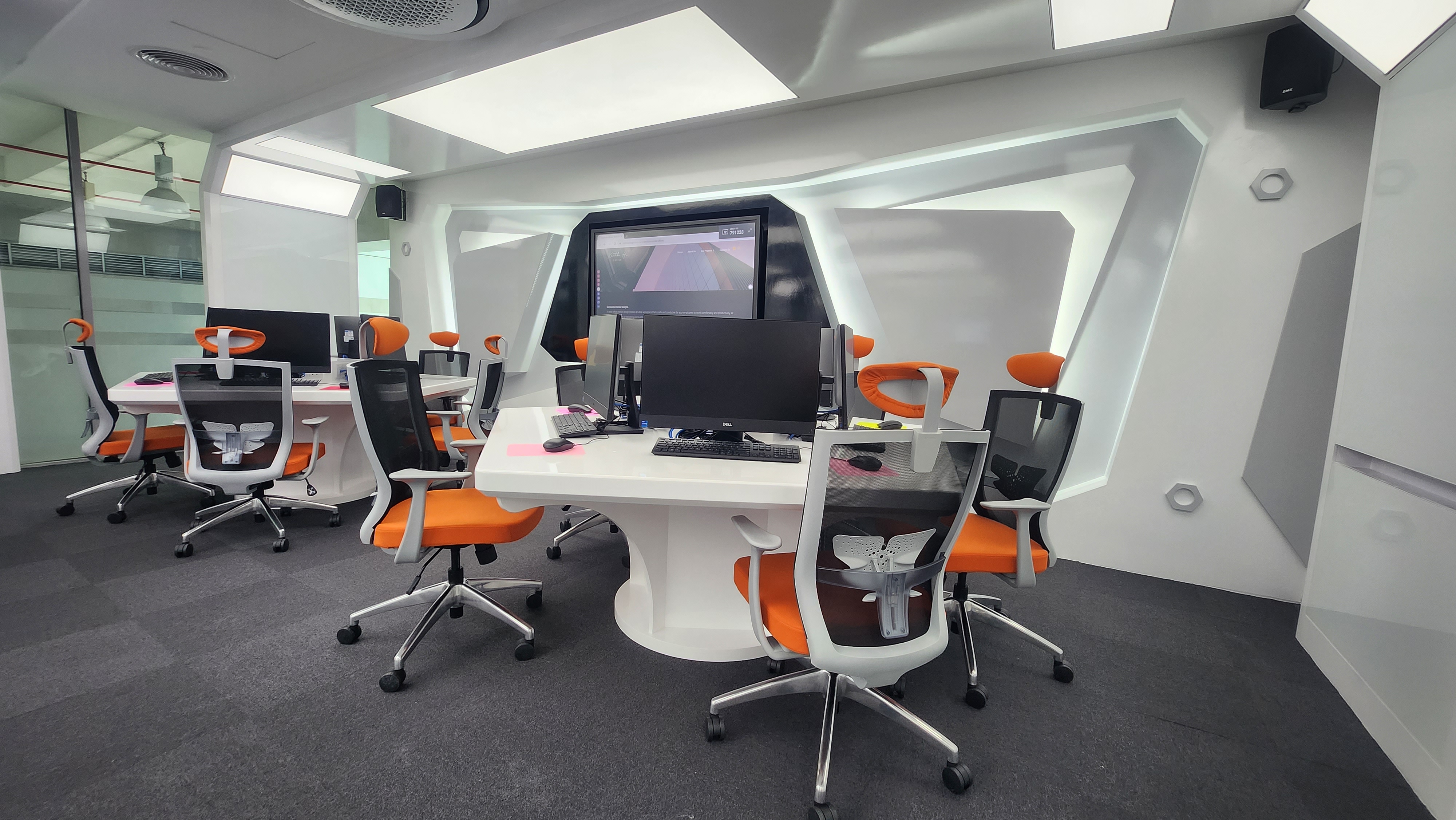
In contrast, Xsolla Curine Academy presents a more creative and flexible interpretation of lecture hall design as a public space.
.jpg)
A Learning Environment Built for Interaction
The academy's design supports:
Rather than rigid seating, the space encourages movement, discussion, and adaptability.

Key Public Space Design Strengths
Why It Stands Out
Xsolla Curine Academy proves that public education spaces can be both functional and expressive, aligning spatial design with learning culture - an approach recognised under ATAP Best Public Space Design.
Traditional vs ATAP Best Public Space Lecture Halls
Why ATAP Best Public Space Design Matters for Education
This ATAP category recognises spaces that:
For education institutions, this recognition signals design excellence, credibility, and future readiness.
FAQs: Lecture Hall Design as Public Space in Malaysia
1. Why are lecture halls considered public spaces?
They are shared environments used daily by large groups of students and educators.
2. What makes a lecture hall award-worthy?
Strong acoustics, clear sightlines, comfort, technology integration, and user-focused planning.
3. How does public space design improve learning?
It enhances comfort, accessibility, and engagement, leading to better academic outcomes.
4. Are flexible lecture halls better than fixed ones?
Yes, especially for modern teaching methods that require adaptability.
5. Does design impact student performance?
Well-designed spaces reduce fatigue and improve focus and participation.
6. Is ATAP recognition important for institutions?
Yes. It validates design quality and reinforces institutional reputation.
Conclusion: Great Lecture Halls Are Great Public Spaces
A great lecture hall is not just a room for teaching - it is a high-performing public space that supports learning, interaction, and comfort. As demonstrated by Malaysia's ATAP Best Public Space Design winners, the IMU Lecture Hall and Xsolla Curine Academy show how thoughtful design can elevate education environments.
For institutions aiming to lead in lecture hall design Malaysia, these projects offer clear, award-winning benchmarks where public space design and learning excellence come together.
This article explores what makes a great lecture hall, comparing traditional and modern approaches while drawing insights from two ATAP Best Public Space Design-winning education projects: the IMU Lecture Hall and Xsolla Curine Academy. Together, they set strong benchmarks for lecture hall design in Malaysia.
The Changing Role of Lecture Halls as Public Spaces
Lecture halls are among the most heavily used public spaces on a campus. In Malaysia, they must support:
- Large and diverse student populations
- Long teaching hours and intensive academic use
- Hybrid and technology-driven learning
- Institutional branding and public perception
Recognition under ATAP Best Public Space Design highlights that these lecture halls succeed not only as interiors, but as high-performing public environments that serve students, educators, and institutions alike.
Traditional vs Modern Lecture Halls: A Clear Design Shift
Traditional Lecture Hall Design
Traditional lecture halls are typically defined by:
- Fixed, tiered seating
- Single-direction teaching focus
- Limited flexibility
- Minimal interaction
While functional, these spaces often prioritise capacity over comfort and struggle to support evolving teaching methods.
Common challenges include:
- Uneven sightlines
- Acoustic limitations
- Reduced student engagement
- Physical fatigue during long sessions
Modern Lecture Hall Design
Modern lecture halls - especially those recognised as Best Public Space Design - prioritise the user experience.
Key characteristics include:
- Clear sightlines from every seat
- Professionally engineered acoustics
- Integrated AV and digital systems
- Ergonomic seating and circulation
These spaces are designed to support both learning performance and public usability, aligning with contemporary education needs.
What Defines a Great Lecture Hall Today
Across award-winning education projects in Malaysia, several design principles consistently stand out:
1. Sightlines and Spatial Clarity
Every student should feel equally included. Good lecture hall design ensures:
- Unobstructed views of lectures and screens
- Logical seating tiers
- Clear circulation paths
This reinforces fairness and focus within a public learning space.
2. Acoustic Excellence
As public spaces with high occupancy, lecture halls demand:
- Speech clarity across large volumes
- Controlled reverberation
- Acoustic materials integrated into walls and ceilings
Strong acoustic performance is a hallmark of ATAP-recognised public education spaces.
3. Lighting for Learning
Effective lighting design balances:
- Visual comfort
- Screen visibility
- Alertness over long durations
Well-designed lecture halls use lighting to support concentration without distraction.
4. Integrated Technology
Modern lecture halls function as shared digital platforms. This includes:
- Hybrid learning capability
- Recording and broadcasting systems
- Seamless lecturer control
Technology should enhance learning - not overwhelm the space.
5. Comfort in High-Use Public Spaces
Comfort is essential in lecture halls that function as daily public spaces. This includes:
- Ergonomic seating
- Adequate legroom
- Good ventilation and thermal comfort
These factors directly influence attention span and learning effectiveness.
Creative Public Learning Spaces at Xsolla Curine Academy
In contrast, Xsolla Curine Academy presents a more creative and flexible interpretation of lecture hall design as a public space.
A Learning Environment Built for Interaction
The academy's design supports:
- Collaborative learning
- Industry-style teaching
- Informal engagement
Rather than rigid seating, the space encourages movement, discussion, and adaptability.
Key Public Space Design Strengths
- Flexible layouts that adapt to different learning formats
- Visually engaging interiors that inspire creativity
- Integrated digital tools for contemporary learning
- A welcoming atmosphere suited to a shared public environment
Why It Stands Out
Xsolla Curine Academy proves that public education spaces can be both functional and expressive, aligning spatial design with learning culture - an approach recognised under ATAP Best Public Space Design.
Traditional vs ATAP Best Public Space Lecture Halls
| Aspect | Traditional Lecture Hall | ATAP Best Public Space Design |
| Function | Teaching-focused | Learning & public-use focused |
| Layout | Fixed & rigid | Flexible & inclusive |
| Acoustics | Basic | Professionally engineered |
| Comfort | Minimal | Ergonomic & user-centric |
| Engagement | Passive | Active & interactive |
Why ATAP Best Public Space Design Matters for Education
This ATAP category recognises spaces that:
- Serve large public user groups
- Perform consistently under heavy use
- Deliver long-term value and adaptability
- Enhance everyday user experience
For education institutions, this recognition signals design excellence, credibility, and future readiness.
FAQs: Lecture Hall Design as Public Space in Malaysia
1. Why are lecture halls considered public spaces?
They are shared environments used daily by large groups of students and educators.
2. What makes a lecture hall award-worthy?
Strong acoustics, clear sightlines, comfort, technology integration, and user-focused planning.
3. How does public space design improve learning?
It enhances comfort, accessibility, and engagement, leading to better academic outcomes.
4. Are flexible lecture halls better than fixed ones?
Yes, especially for modern teaching methods that require adaptability.
5. Does design impact student performance?
Well-designed spaces reduce fatigue and improve focus and participation.
6. Is ATAP recognition important for institutions?
Yes. It validates design quality and reinforces institutional reputation.
Conclusion: Great Lecture Halls Are Great Public Spaces
A great lecture hall is not just a room for teaching - it is a high-performing public space that supports learning, interaction, and comfort. As demonstrated by Malaysia's ATAP Best Public Space Design winners, the IMU Lecture Hall and Xsolla Curine Academy show how thoughtful design can elevate education environments.
For institutions aiming to lead in lecture hall design Malaysia, these projects offer clear, award-winning benchmarks where public space design and learning excellence come together.
Jan 20,2026